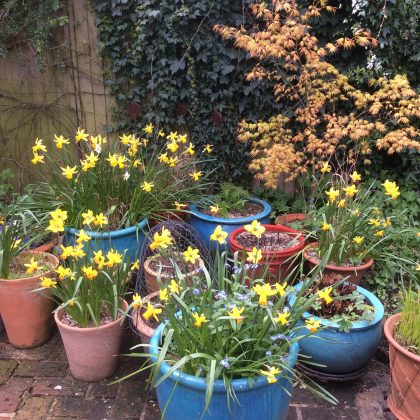
14 frogs, yes 14! read on to find out more……
Pond
Our pond is the size of a hula-hoop. It had been frozen over and I had no idea if frogs could survive under the seal of ice. I wish I’d paid more attention in biology classes at school. I was thrilled when I lifted out the slabs of ice and saw three lively frogs swimming about in the melted water. A few days later a lump of frogspawn appeared. Very happy about that.
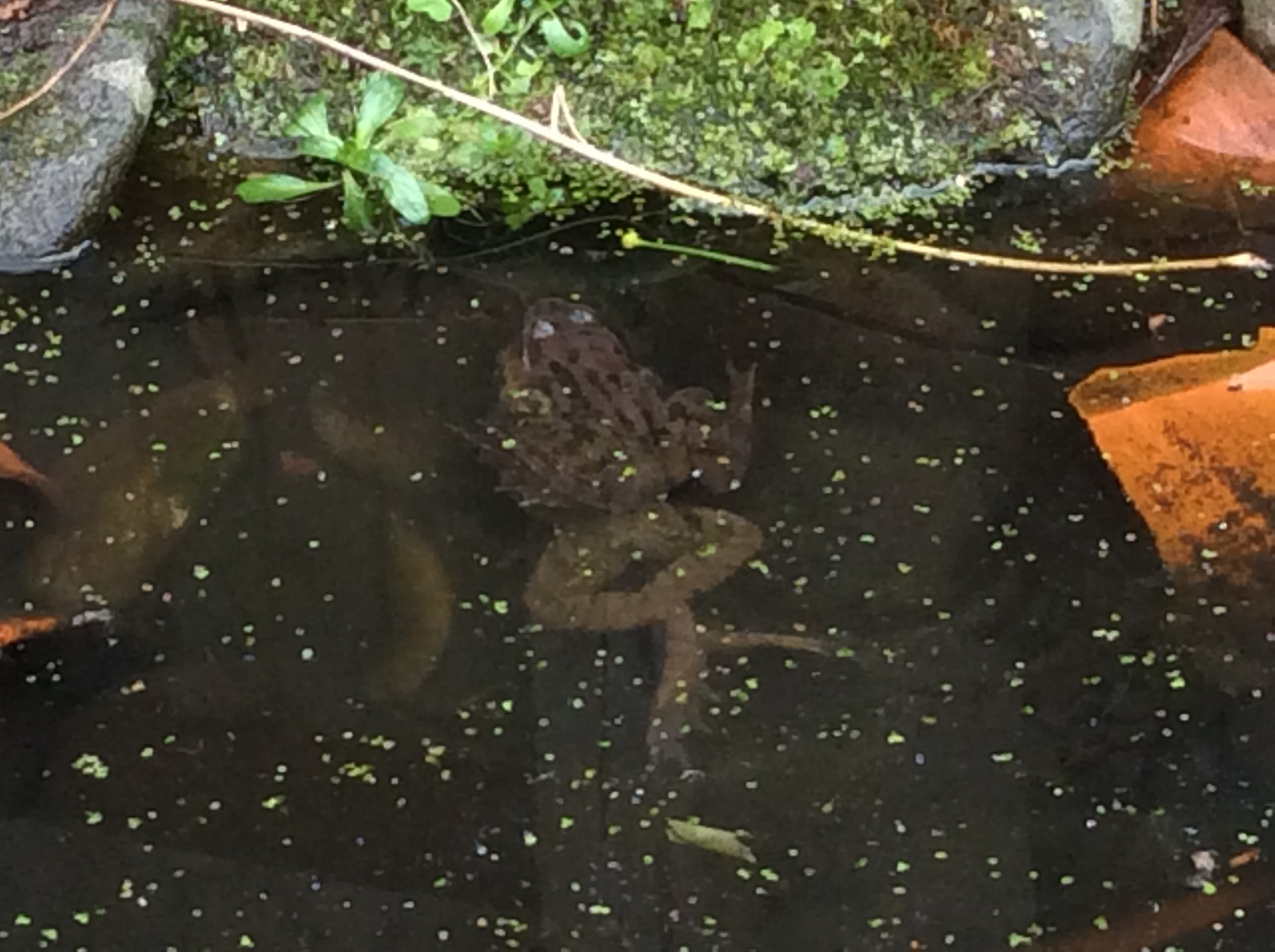
Can you see them?
Even more exciting. Today I saw 14, yes 14, froggy heads peeping out of the water. No photo I’m afraid as they hear/see me coming and plop down into the water. I don’t know where they all came from so suddenly. They look full sized frogs (or toads) so maybe they have been in the garden all winter.

Frogspawn!
I think the secret of success is the old terracotta pots all around the edge of the pond and many have fallen in the water. Whole or broken, they make great places for wildlife to hide. I love the effect they make and how they add colour to the pond area.

Old terracotta pots edging the pond and sheltering wildlife
Snowdrops
I bought bunches of snowdrops in the green at the February RHS Spring Show and popped the clump into a pot just as a temporary measure while I went on holiday. (called heeling them in). Today I planted them in twos and threes. They’re still flowering and this is the best time to plant them. They will die down soon and come up next year. It’s funny to be planting now something to bring joy and optimism next January. That’s gardening – always looking ahead.

Snowdrops still flowering and planted out now to come up stronger next year
Lovely mulch
I saw a local front garden with a beautiful mulch of fine horse manure. It looked wonderful nutritious stuff and made the flower beds look dark and cared for.

Lovely dark brown moist crumbly nutritious mulch
However, in the street a public area flower bed had been mulched with what looks like orange coloured wood chippings and I think it doesn’t look half as nice. Wood chippings will keep down weeds but the manure mulch will feed the soil in so many ways. A matter of personal taste of course.

Bright orange wood chips for a mulch
Laurel berries
Spotted laurel is one of the commonest garden shrubs and I’ve walked past this one down our front path every day for 30 years. I can honestly say I had never noticed it had red berries – not consciously anyway. I read somewhere that to see them you had to cut back the foliage which was hiding them. I did that and lo and behold there were loads of berries!! Embarrassing to admit that I hadn’t known they were there before. You never stop learning with gardening (and yes, I managed to cut off some berries by mistake).

So much cheerier with the berries showing

Glossy red berries on a common laurel bush
White hellebore
I wrote before that I am not a fan of dark maroon hellebores but look at this wonderful white one. I have a clump in the front – no idea where I got it from but it’s fab.

A lovely frilly double creamy white hellebore

White hellebore in the woodland area
Primula
This is a lovely red primula called Don Keefe. It’s been nibbled and has become congested. It has several central points and the leaves are all going in different directions so I will dig it up, divide into little pieces and replant giving each piece a bit of space to spread.

A congested primula needing to be divided
Thankyou to the propagator who hosts this Six on Saturday theme and over on his blog you can find other people’s sixes.