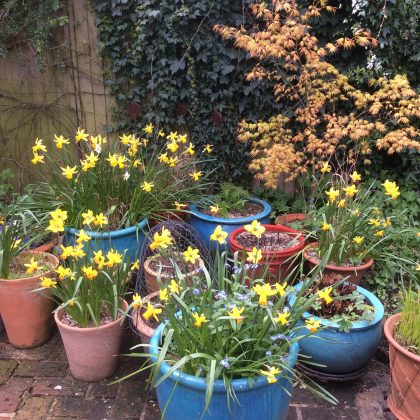
On April 1st I wrote a blog about all the jobs I wasn’t going to bother doing and how I was going to just sit in the garden and read the paper. Well that did turn out to be a joke because April 2nd saw me on my hands and knees weeding and I haven’t stopped since.
Also I’m now seeing the results of not doing all the other things I could have been doing in late Winter.
Over the winter, when clumps of perennials were starting to come through, I let them come. Unfortunately 99 per cent of them were the common hardy geranium oxonianum, various shades of pink, that you see on waste ground and which has now smothered everything under and near it.
This is it
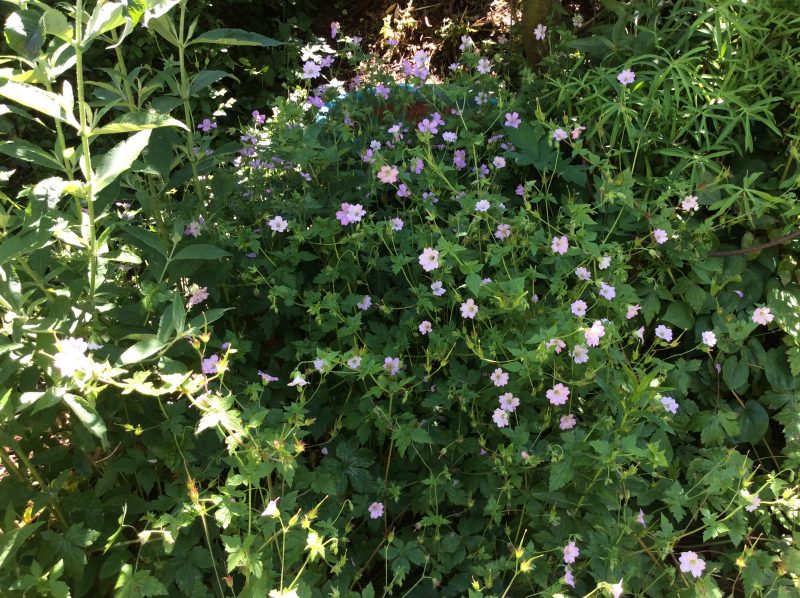
Common hardy geranium can be any shade of pink
It’s a lovely plant, attracts bees and can cover large areas if that’s what you need, but in this cottage garden it has deprived all my little treasures of light and now I can’t find them. I’ve dug up bags of the stuff and will now treat it as an unwanted plant, pulling it up as I find it and confining it to certain places where little else can grow.
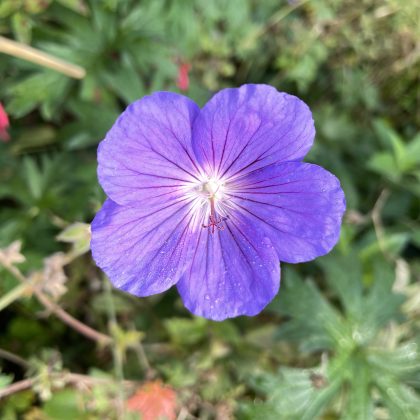
Geranium phaeum has been the same. It’s a fabulous plant for early May and a must in a cottage garden. It feeds bees and flowers early BUT it has seeded everywhere and is a thug. It is easy to pull out, but even so to keep doing that is a full-time job too. I will also remember to cut it right down before it self-seeds, which will give me fresh new leaves but no new flowers thank goodness.
Here it is
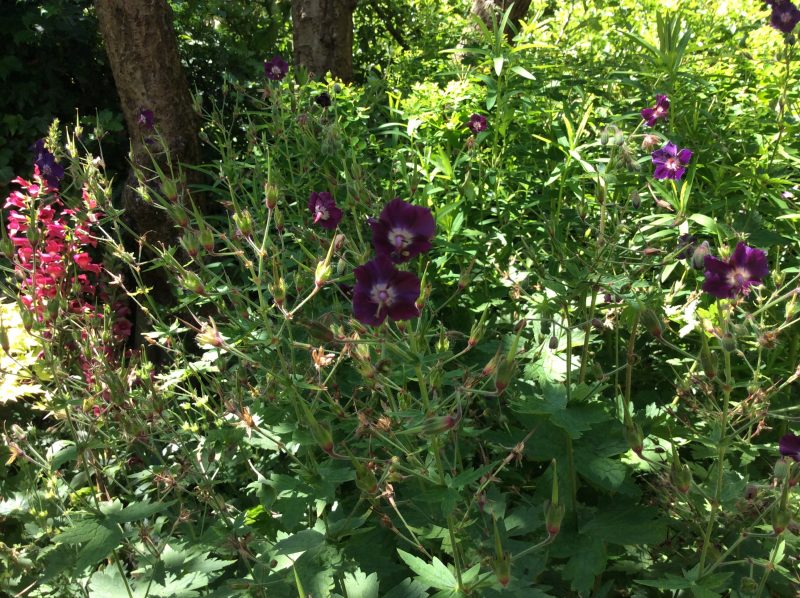
Phaeum can be anything from lilac through maroon to purple
Failing to keep it contained in early Spring has meant that it too has pushed out more delicate plants unable to fight for their space. I always wonder where all those special plants I keep buying go to.
The jasmine and honeysuckle on the fence have gone berserk, and are so thick and leaning so far into the border that the plants underneath are having to lean out horizontally to get any light. I should have cut the climbers right back to the fence in early Spring so that new growth would be closer to the fence.
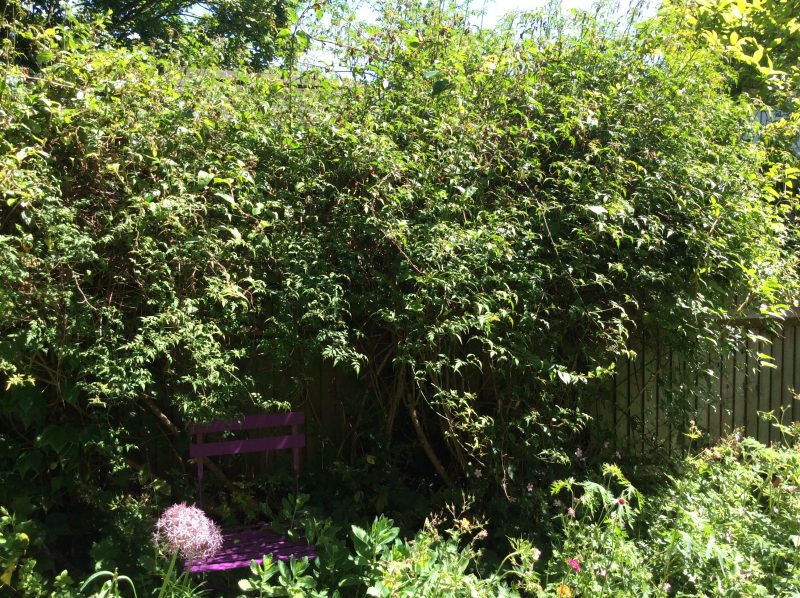
Huge tangle of jasmine, honeysuckle and clematis
There’s a clematis in there somewhere, so I will lose that if I cut into this tangled mess now. I’ll have to wait till later in the year and then tackle it properly next Spring.
I had two honeysuckles on obelisks which I left unpruned from last year. Big mistake. Unfortunately when they shot into new growth earlier this year they became enormous and made a huge tangled tree shape. They were so congested they were covered in aphids which the ladybirds couldn’t keep on top of. The flowers shrivelled and went brown. Last week I had to cut them down to a woody framework for them to start again, so I have lost this year’s flowers
If I had kept on top of the trachelospermum around the front door on one side and the honeysuckle on the other side we would now be able to see out of our side windows and our hall would not be plunged in darkness.
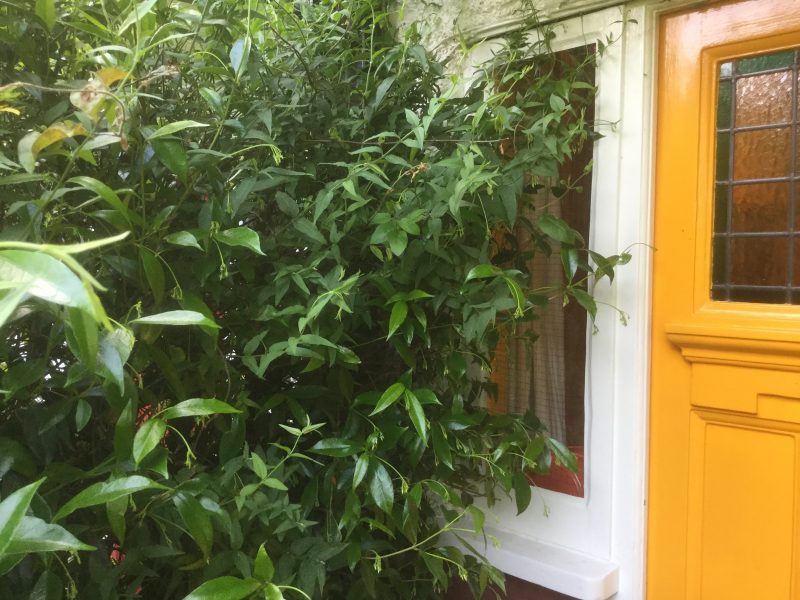
Tangled mess of jasmine and honeysuckle
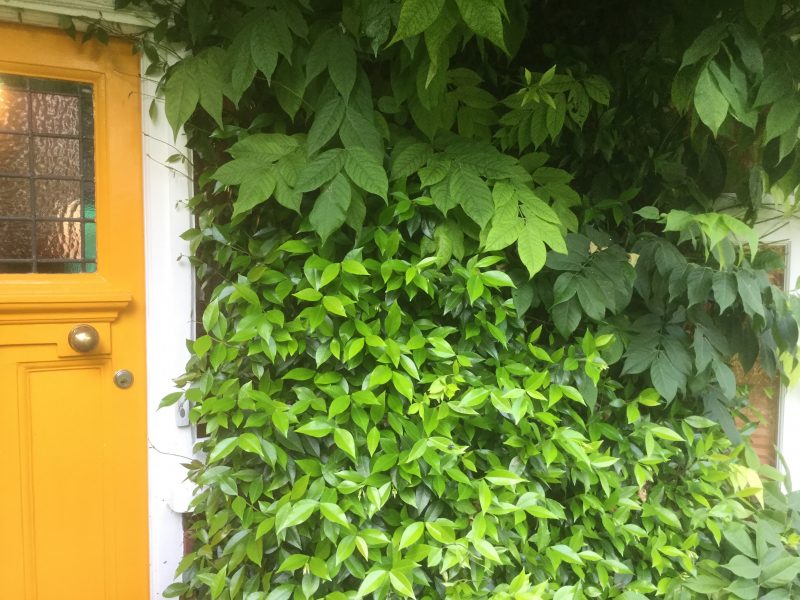
Tangled mess of trachelospermum
However, here are some successes.
By leaving things undisturbed look what can happen. Yellow Welsh poppies seed themselves everywhere every year and turn out to be some of the loveliest flowers in the garden, front and back.
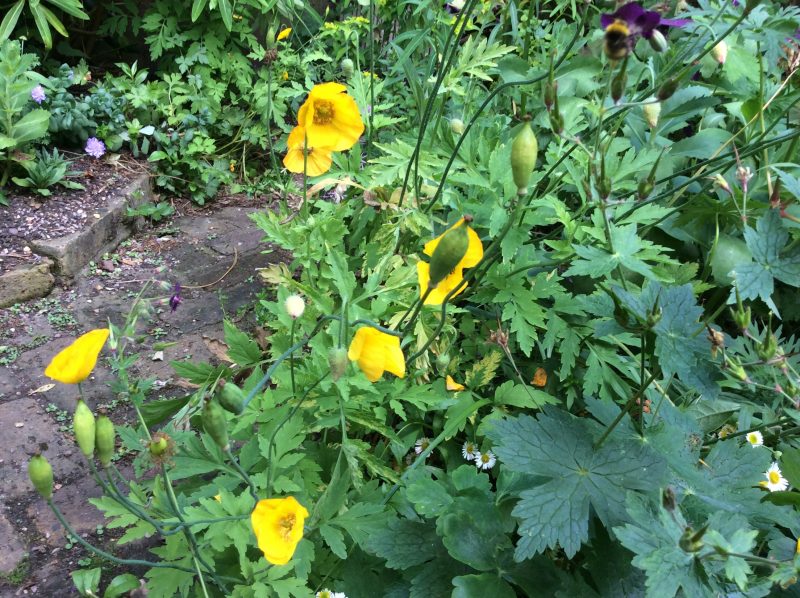
Self seeded poppies in a cottage garden
Years ago I dug out a David Austin Rose because it wasn’t thriving and because I tore my arms anywhere near it. I must have left a piece of root because now there is a shoot and it’s flowering. Just goes to show that things will grow despite us not because of us.
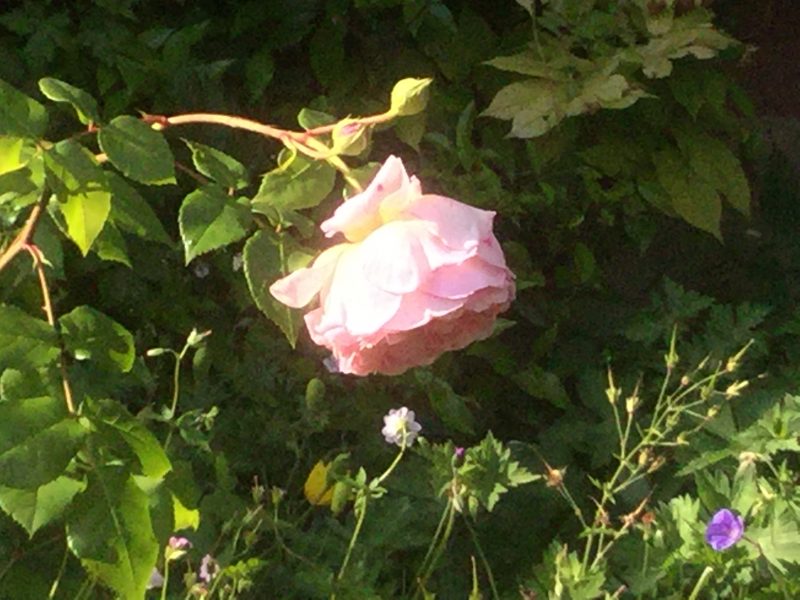
Abraham Derby – a typical cottage garden rose
And here is a white astrantia I thought I had dug out years ago because it smells pretty awful but it’s come back and actually looks lovely.
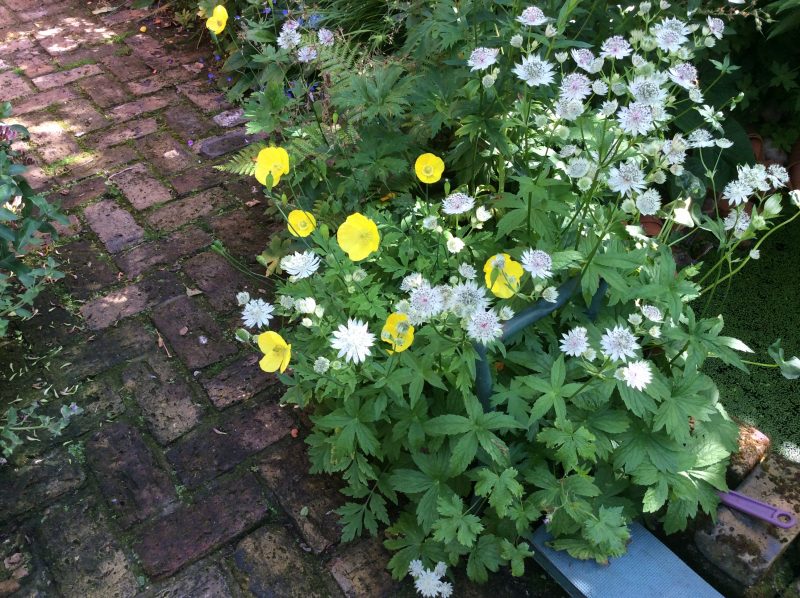
Astrantia – more than one variety – mixing with poppies
And here is marvellous alchemilla mollis growing in the paving. It will look lovely when it gets going. I just hope it doesn’t lift the bricks up.
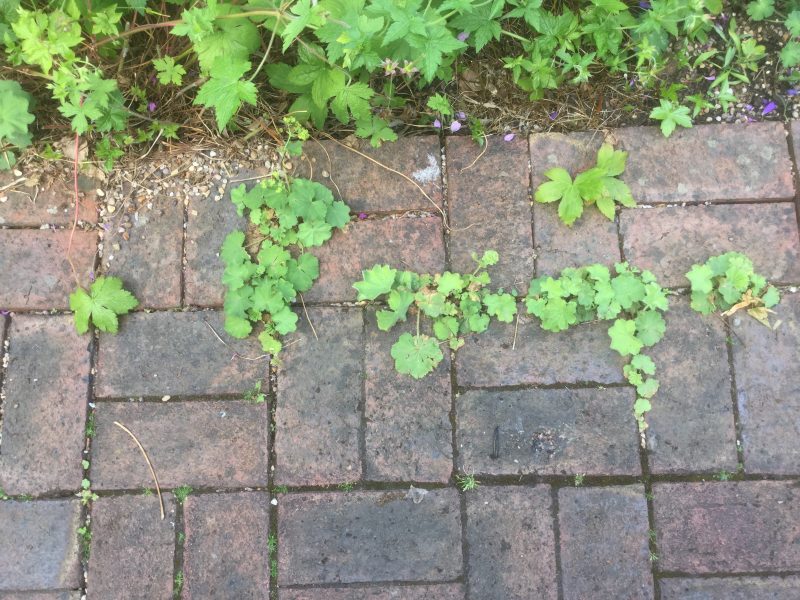
Alchemilla self seeded in the cottage garden path
The lesson of all this is for me to be brave and cut back in late Winter, remembering that everything will regrow quickly in Spring, but even with experience I find it hard to imagine the garden when I’m staring at it in January.